Small Space, Big Style: Decorating Ideas for London Flats
Small Space, Big Style: Decorating Ideas for London Flats
London flats are rarely generous with space. A one-bedroom conversion might give you tall ceilings, a narrow hallway and a front room that has to be a sitting room, a dining room, an office and occasionally a guest bedroom. The trick is not to fight those limitations but to work with them. With a few deliberate choices, a compact London flat can feel stylish, calm and surprisingly roomy.
Start with a plan, not a shopping list
Before you buy a single cushion, measure the room. Note the position of radiators, sash windows, doors, alcoves and plug sockets. A simple floor plan on graph paper or a free app will show you what actually fits. In London flats, awkward corners are common: chimney breasts, boxed-in pipes and corridors that lead nowhere. Treat those features as opportunities. An alcove can become a bookcase, a desk or a wardrobe. A dead-end hallway can hold a slim console, a mirror and a row of hooks.
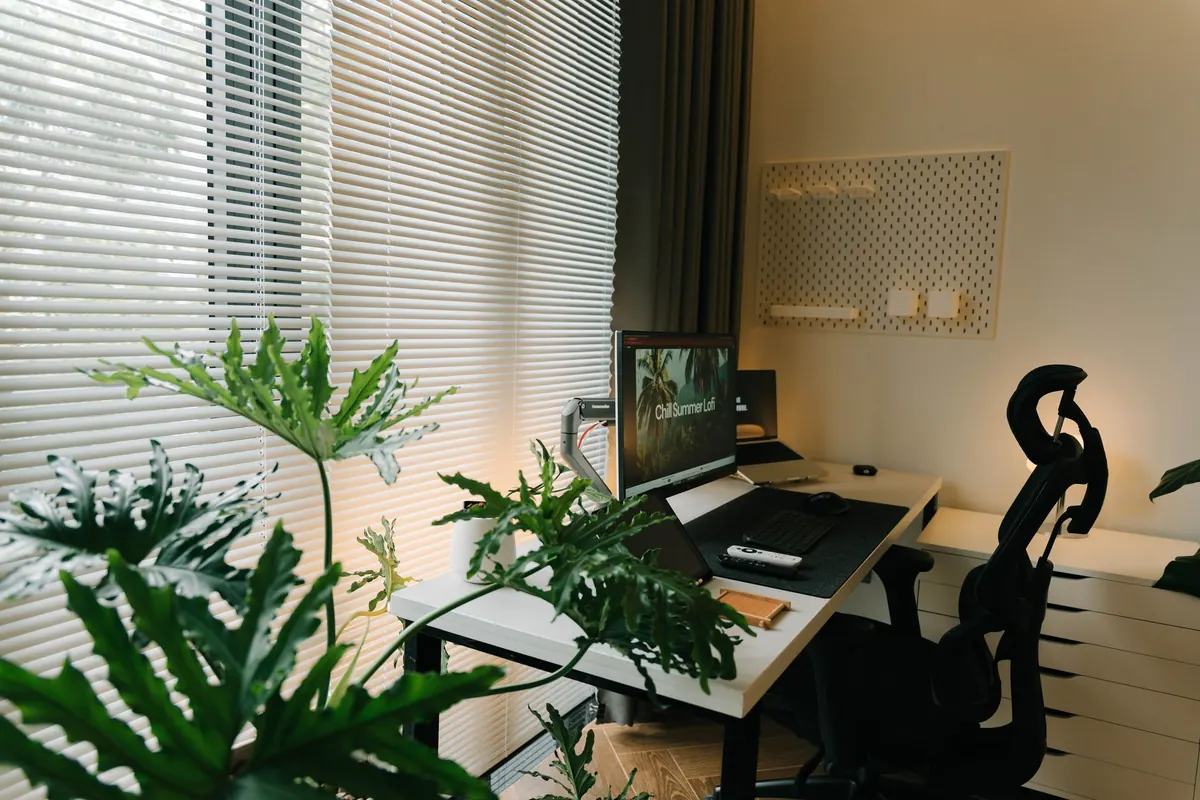
Decide how each zone will be used. If the front room must be a living room and office, define the desk area with a rug, a task lamp and a pinboard. If the bedroom doubles as a dressing room, keep the bed as the calm centre and push storage to the walls. A plan prevents you from buying furniture that looks good online but blocks a doorway in real life.
Let there be light, and mirrors
Light is the most powerful decorating tool in a small flat. Keep curtains light and hang them high and wide so the window feels larger. Avoid heavy pelmets and dark blinds that chop the room in half. If you have sash windows, repair or replace tired cords and clean the glass. In darker rooms, use layered lighting instead of one central bulb: a floor lamp, a table lamp, a wall light and a warm bulb can create pools of light that make the space feel intimate rather than dim.
Mirrors are another quiet trick. Place a large mirror opposite a window to bounce daylight into the room. A mirrored splashback in the kitchen or a full-length mirror in the hallway can make a narrow space feel twice as wide. Just avoid placing mirrors where they reflect clutter; they amplify whatever they see.
Choose furniture that does more than one job
In a small flat, every piece should earn its place. Multifunctional furniture is not just practical; it can also look more considered than a room full of single-purpose items. Look for a sofa bed with a proper mattress, a coffee table with hidden storage, a dining table that folds against the wall, or an ottoman that holds bedding and doubles as a seat.
- Storage ottoman: use it as a coffee table, extra seating and a place for throws and pillows.
- Nesting tables: pull them apart for guests, push them together when the room is quiet.
- Wall-mounted desk: a slim shelf with a chair that tucks underneath saves floor space.
- Bed with drawers: lifts storage off the floor and uses the space under the mattress.
Choose furniture with exposed legs where possible. A sofa or chair on slim legs lets you see more floor, which makes a room feel larger. Avoid bulky recliners and deep armchairs unless the room can genuinely take them.
Think vertically
London flats often have high ceilings, especially in Victorian and Edwardian conversions. That height is valuable storage waiting to happen. Use tall bookcases, wall-mounted shelves, hooks behind doors and a pegboard in the kitchen. In the hallway, a narrow bench with hooks above it can hold coats, bags, keys and post without taking up much floor space. In the bathroom, a tall slim cabinet or a ladder shelf uses the wall rather than the floor.
When you go vertical, keep the top two-thirds visually light. Open shelves with a few well-chosen objects look better than shelves crammed to the ceiling. Baskets and boxes hide the mess, while plants and ceramics add personality.
Use colour to blur boundaries
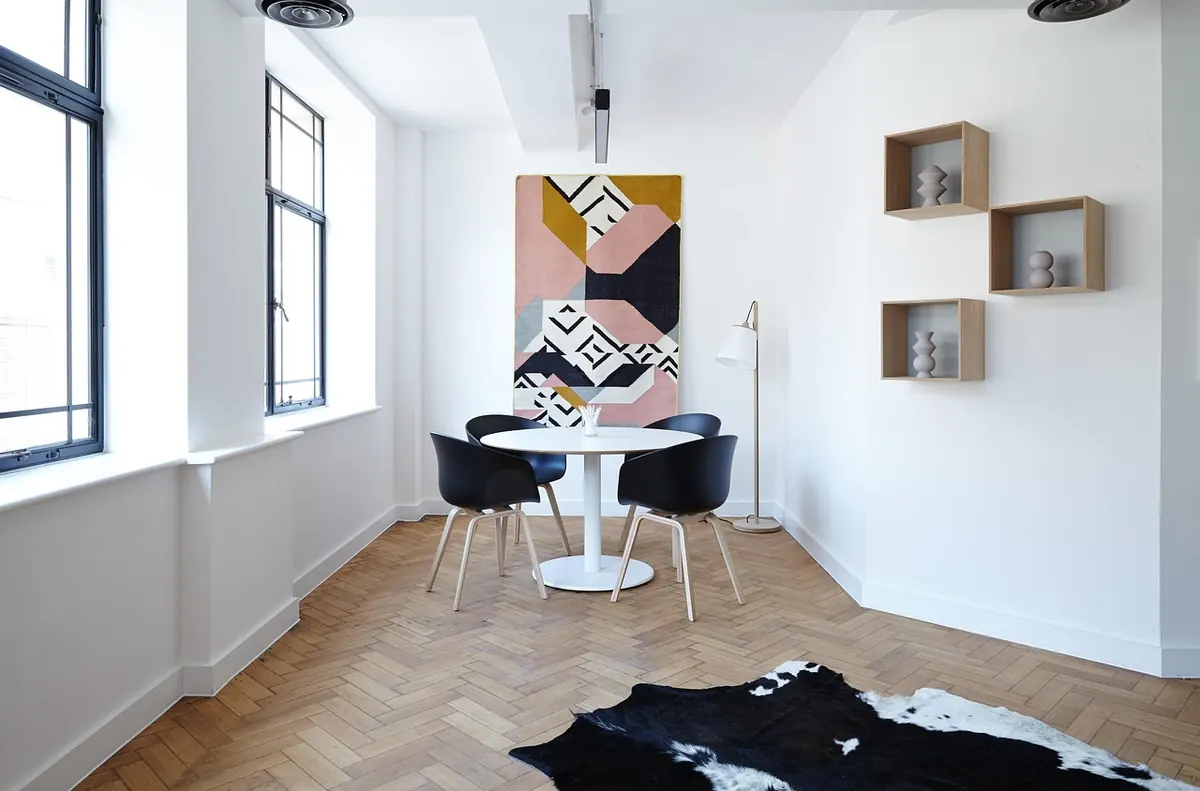
Small rooms do not have to be white, but colour should be used with intention. A tone-on-tone scheme, for example pale grey walls, slightly deeper grey curtains and a matching rug, makes the space feel seamless. If you want a bolder look, paint an alcove, a chimney breast or the back of a bookshelf in a deeper shade. This creates depth without closing the room in.
Do not forget the ceiling. Painting it the same colour as the walls can make awkward corners disappear. If you have a dark hallway, a warm white or soft off-white will keep it from feeling like a tunnel. In north-facing rooms, choose colours with a warm undertone; in south-facing rooms, cooler tones can balance strong light.
Zone a studio or open-plan room
In a studio or open-plan flat, zoning is everything. You need the eye to understand where one activity ends and another begins. A rug under the sofa defines the living area. A small dining table near the window becomes the eating area. A desk facing a wall, rather than floating in the middle, signals work mode. A room divider, such as a bookshelf, a slatted screen or a curtain on a track, can separate the bed from the sofa without building a wall.
Lighting helps with zoning too. Use a pendant over the dining table, a floor lamp beside the sofa and a bedside light in the sleeping area. Each pool of light tells your brain what that part of the room is for.
Renter-friendly updates
Many London flats are rented, so permanent changes may not be allowed. Fortunately, you can do a lot without losing your deposit. Peel-and-stick wallpaper works on the inside of alcoves or as a feature panel. Tension rods can hold curtains in a doorway or hide a messy shelf. Plug-in wall lights avoid rewiring. Removable hooks and no-drill shelves can hold light items. If you cannot paint, use a large piece of art, a textile hanging or a folding screen to change the mood.
Quick wins under £50
- Swap harsh ceiling bulbs for warm white LED bulbs.
- Add a runner in the hallway to draw the eye forward.
- Use matching hangers to make a small wardrobe feel calmer.
- Put a tray on the coffee table to group small objects.
- Hang a mirror opposite the main light source.
Common small-space mistakes to avoid
- Buying before measuring: a sofa can look small in a showroom and huge in a flat.
- Overfilling shelves: clutter makes even a large room feel tight.
- Using too many small rugs: one larger rug makes a room feel more expansive.
- Ignoring the hallway: first impressions matter, and a tidy hallway makes the whole flat feel bigger.
- Choosing furniture with heavy arms and dark legs: it can visually shrink the floor.
Final thought
Decorating a London flat is an exercise in editing. Keep what you love, store what you need and let each room do more than one job. You do not need more square metres to create a home with style. You need a clear plan, a few smart pieces and the confidence to say no to anything that makes the space feel smaller.
Small spaces reward intention. When every object has a purpose and every corner has a plan, a London flat can feel generous, elegant and entirely yours.
Photo: Pexels / Pixabay