Winter Warmth: How to Use Textiles to Cosy Up Your Home
The first proper cold snap always shows up the gaps. Bare floorboards, curtains that stop short of the frame, a sofa stripped back in April and never dressed again. Textiles are the quickest fix in a home, and the cheapest way to change how a room feels at this time of year — not just how it looks. A good throw does more for a chilly evening than nudging the thermostat up another degree.
Begin at the Windows
Windows are where most heat leaves a room, and where the least effort gets you the biggest change. Curtains that cover only the glass are doing half a job. Look for fabric that extends 15–20cm beyond the frame on each side, and hang the track or pole close to the ceiling rather than a few centimetres above the glass. That extra width and height stops cold air creeping around the edges and makes the window feel properly dressed.
If you are buying new, thermal and blackout linings are worth the extra. For an existing pair, a separate lining that hooks on behind the curtain is a straightforward upgrade, and interlining — a layer of wadding between the face fabric and the lining — adds both warmth and that heavy, expensive-looking drape.
Mind the radiator
A long curtain hanging straight over a radiator sends warm air up the back of the fabric and out through the window. Shorten the drop to sit on the sill, or tuck the hem behind the radiator, and fit a shelf above it to push heat into the room instead. It is a small detail that makes a noticeable difference to how quickly a room warms.
Layering helps too. A roller or Roman blind drawn at dusk with curtains closed over the top gives you two barriers rather than one, and a simple fabric valance or pelmet deals with draughts at the top of the window, especially in older houses.
Throws: Layering Without Clutter
A throw works hardest when it is within reach. Fold it rather than spreading it out — a neat rectangle over the arm of a sofa or the back of a reading chair invites use, whereas a rumpled blanket reads as mess. Keep one in every room you actually sit in, and one at the foot of each bed for the nights when a duvet alone is not quite enough.
Texture matters more than colour here. A chunky wool knit next to a smooth cotton weave next to a brushed fleece gives a room depth. Choose fabrics that feel good against the skin as well as looking right, since the whole point is that someone will pull it over their knees.
- Wool and wool blends — warm, hard-wearing and good at holding their shape.
- Cotton waffle or muslin — lighter, ideal for layering in autumn and early spring.
- Faux fur or brushed fleece — the most immediate warmth, best kept to one or two pieces per room.
- Recycled wool or cotton — practical, machine washable and forgiving in busy households.
Cushions and the Art of the Mix
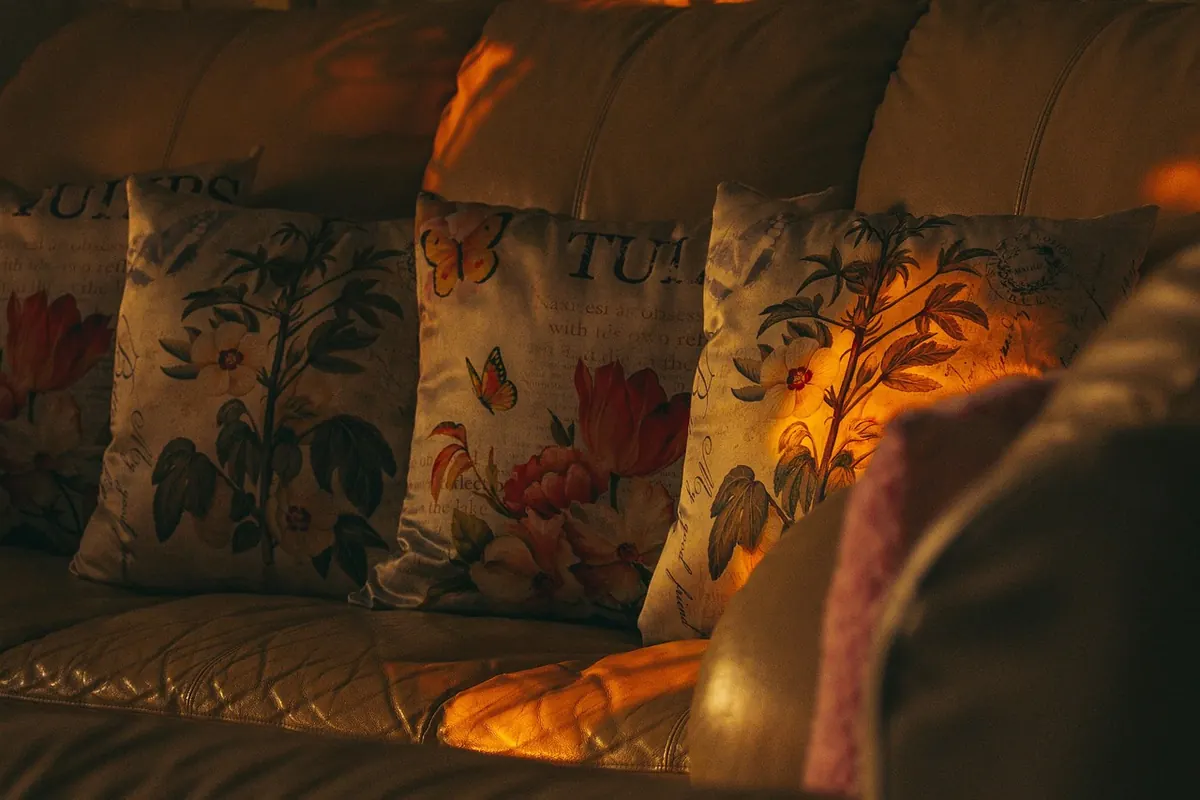
Cushions are the easiest way to shift a room's mood, and the easiest thing to overdo. Start with size. On a standard two or three-seat sofa, two 55cm squares in the corners, two 45cm in front of them and one small 30cm accent is usually plenty. Odd numbers look more relaxed than pairs, and three well-chosen cushions beat six identical ones.
Build the mix from three roles rather than from a colour scheme. One plain, one textural — bouclé, velvet, needlecord — and one patterned. Keep the palette to two or three tones and let the textures do the talking. If your covers came with pads, consider sizing up: a 50cm pad in a 45cm cover gives a fuller, more considered shape. Feather pads sink beautifully; hollowfibre is the kinder choice if anyone in the house has allergies.
Warmer Floors, Warmer Rooms
Hard floors pull warmth from a room, and they are unforgiving underfoot on a January morning. A wool rug with a decent underlay changes the acoustics and the temperature of a space at the same time. In bedrooms, a sheepskin or a small washable rug beside the bed is the most appreciated addition you can make.
If a room feels sparse, layer a smaller patterned rug over a larger plain one. It adds depth, and it lets you change the look without replacing the base. Always use a rug pad or anti-slip underlay, particularly on smooth flooring or near the top of a staircase, and check that edges lie flat to avoid trips.
Colour and Texture, Kept Quiet
Winter palettes work best when they are tonal rather than bright. Oatmeal, clay, rust, ochre, deep green and soft charcoal sit comfortably together and flatter lamplight, which is what most of us are living in by four o'clock. Try layering three or four shades from the same family — a stone throw, a warmer camel cushion, a darker chocolate rug — and let one accent, such as berry red or a faded brass yellow, do the lifting.
Sheen is another lever. Velvet and satin catch low light and make a room feel warmer than the same colour in flat cotton, while matte wool and linen calm them down. A room with a little of both feels considered rather than themed.
A Cold-Weekend Reset
- Close curtains before the light goes and check they reach past the window frame on both sides.
- Bring one throw into every room you sit in, folded and within arm's reach.
- Strip each sofa back to three cushions, then add one texture and one pattern.
- Put a rug or runner on the coldest hard floor in the house.
- Swap one summery cushion or throw for something heavier in wool or velvet.
- Wash and store anything you will not use until spring, so the layers you keep have room to breathe.
Start With One Room
Pick the room you feel coldest in and sort the window first: full-width curtains, closed before dusk. Then the floor, then the seating. One room done properly gives you a template for the rest, and a pile of spare pieces you can move about as the weather turns. Nothing here needs buying in a single weekend, and nothing needs to match. Warmth, like most of the good things in a house, is built in layers.
Photo: ddimitrova / Pixabay