Ready-Made vs Made-to-Measure Curtains: Pros, Cons, and Costs
Curtains are one of the few things in a home you look at every day, and one of the easiest to get wrong. A pair bought in a hurry can hang a hand's width above the floor, or gather so thinly at the window that the two panels never quite meet in the middle. Most of that frustration comes down to a single decision: ready-made or made-to-measure. Neither is right for every room, but one will be right for yours.
What Actually Separates the Two
Ready-made curtains are made in bulk, in a set range of widths, drops and fabrics. You choose the closest match to your window, take them home the same day and hang them. Made-to-measure curtains are cut and sewn for one specific window, in the fabric, lining and heading you have chosen.
The real difference is not luxury, it is fit. A ready-made pair is designed to look reasonable at a wide range of windows. A made-to-measure pair is designed to look right at one. Almost everything else, including the price gap and the waiting time, follows from that.
Ready-Made Curtains: Where They Win
- Price. You can dress a whole room for a fraction of the cost of bespoke work, which matters in a rental, a spare room, or a child's bedroom that will be repainted in two years.
- Speed. No lead time. If guests arrive on Friday, the curtains can be up on Thursday evening.
- Freedom to change your mind. Seasonal swaps, a new paint colour, a house move — inexpensive panels are easy to replace.
- Simple care. Many ready-made pairs are machine washable. Interlined curtains generally are not.
Where They Fall Short
- Fixed drops. Ready-made curtains come in a short list of standard lengths, so a panel rarely finishes exactly where you want it. That is why so many hanging curtains hover above the floorboards.
- Fixed widths. Fullness becomes a compromise. A wide window often needs two pairs joined, and the join shows.
- Narrow choice. Ranges change constantly, and the fabric you love is rarely available in the drop and width you need.
- Variable finish. Heading tape, lining and hemming vary enormously between price points. Cheaper panels can hang unevenly within weeks.
Made-to-Measure Curtains: What You Are Paying For
With made-to-measure, the measurements come first. You measure the pole or track, decide the finished drop, and the curtains are cut to those numbers. The panels actually cover the window, the hems land where you intended, and the gather is generous rather than apologetic.
Beyond fit, you get choice: fabric by the metre in a far wider range of weaves and colours, linings to suit the room (blackout for bedrooms, thermal for draughty sash windows, interlined for weight and insulation), and headings from pencil pleat and pinch pleat to eyelet, wave and goblet. Pattern matching across a pair is usually possible too, so the design sits level on both panels.
The trade-offs are honest ones. Made-to-measure costs more, often several times the price of an off-the-shelf pair in a similar cloth. Lead times run to weeks rather than minutes. Returns are usually not possible, and a measuring error is expensive. You are also committing to a look — wonderful when you have chosen well, tiresome when you have not.
Fit, Fullness and the Details That Decide the Look
- Measure the pole or track, not the window. Curtains should cover the whole opening, with an overlap in the middle and enough return at each end to reach the wall.
- Aim for two to two and a half times fullness. That is fabric width relative to the track. Below two times, curtains look flat; beyond three, they look heavy and cost more than they need to.
- Decide the drop deliberately. Sill length, just below the sill, floor length, or breaking slightly onto the floor. Each gives a different feel, and only one will suit the room.
- Think about stacking space. Open curtains need somewhere to sit. If wall space is tight, a made-to-measure pair in a slimmer heading may be the only way to keep the glass clear.
- Check what sits beneath the window. A radiator usually rules out full-length curtains, while a deep sill may suit a shorter drop.
What Drives the Cost
Made-to-measure quotes are built from fabric quantity, and fabric quantity is driven by width and fullness. A wide bay with a generous gather can use a surprising number of metres. Add the lining, any interlining, the heading, the making-up and the finishing touches such as hem weights.
Two details catch people out. First, pattern repeats: a large design needs extra fabric so the pattern can be matched across both panels. Second, hardware. A flimsy track will undo the effect of beautifully made curtains, so budget for a pole or track that can carry the weight. Get quotes in writing and check whether measuring, fitting and hardware are included, as they are sometimes priced separately.
Ready-made is cheaper because none of that is tailored to you. The fabric is bought in volume, the panels are cut to standard sizes, and the cost is shared across thousands of identical pairs.
The Middle Path: Ready-Made, Adjusted
If you love a ready-made fabric but not the length, a local curtain maker or alterations service can shorten the hem, add a lining or convert a pencil pleat heading to eyelets. It costs a fraction of full bespoke work and solves the most common complaint. It works best when the width is already close — no amount of hemming will fix panels that are too narrow for the window.
A Practical Way to Decide
Work through the windows one at a time, because a house rarely needs the same answer throughout.
- Is the window awkward? Bays, very tall or very wide openings, sloping ceilings and glazed doors usually justify made-to-measure.
- Will the room change soon? If a repaint or a move is likely within a couple of years, ready-made keeps your options open.
- How long will you live with it? Curtains in a main living room are seen daily for years. That is where bespoke earns its keep.
- What is the honest budget? Made-to-measure is worth doing properly or not at all. A compromise that leaves the curtains too short is money wasted.
- Can you wait? If the answer is no, ready-made plus a small alteration is often the sensible route.
Whatever you choose, measure twice, order a sample before committing to a colour, and check that the heading suits your pole or track. If the window is genuinely complicated — an unusual shape, an exceptionally long drop, a listed interior — it is worth paying a curtain maker to measure. That small cost protects a much larger one.
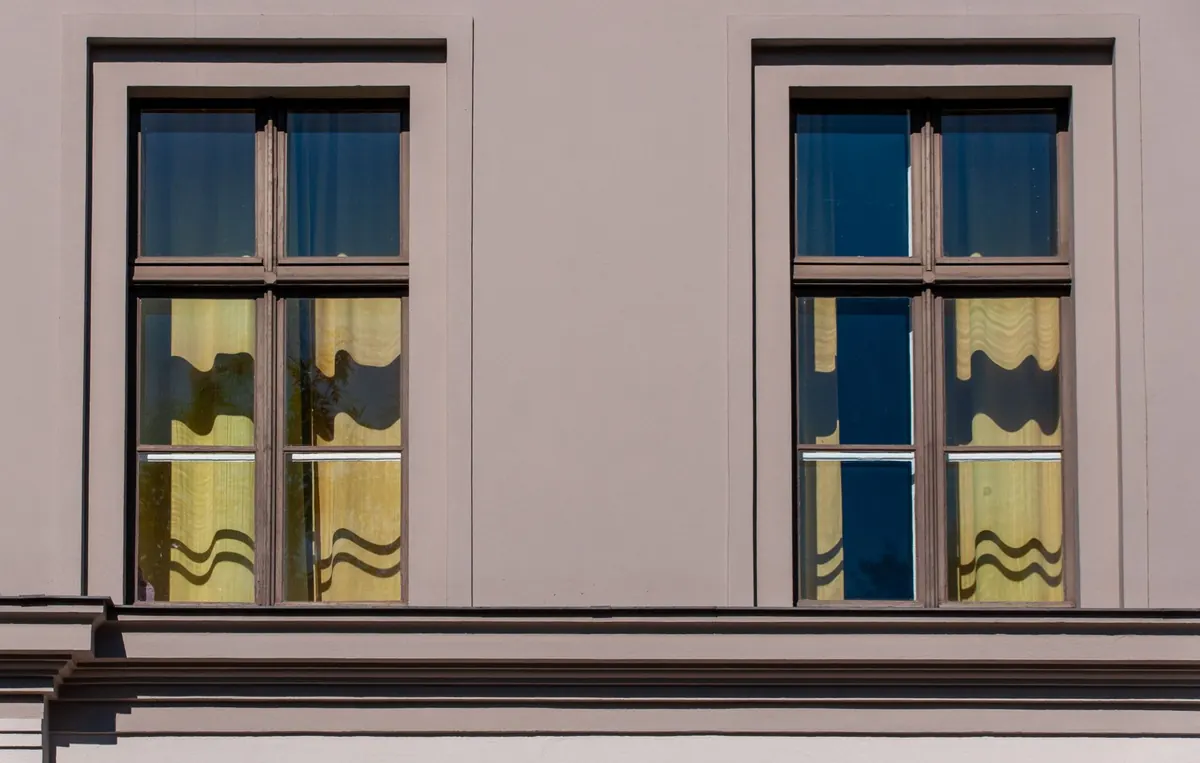
Photo: wal_ 172619 / Pexels